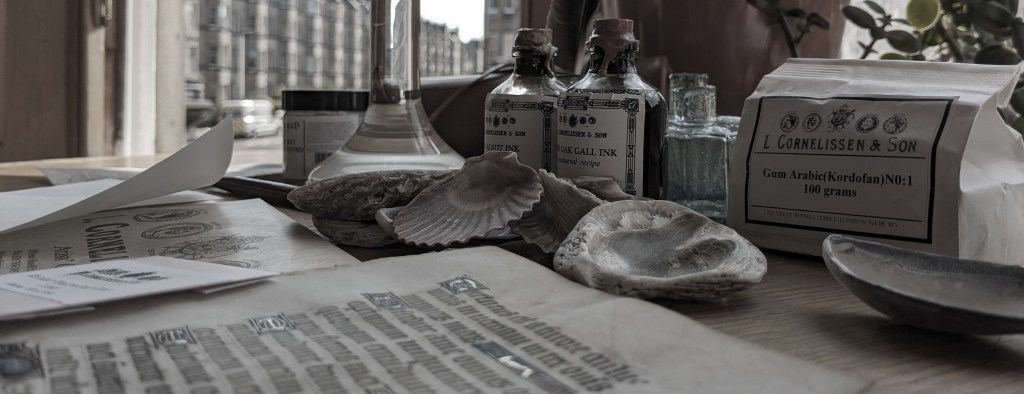
The following research projects are all currently underway and at various stages:
Distributed Cognition and Late-Medieval Manuscripts
Distributed cognition is a cognitive theory that describes how information processing is dispersed across people’s minds and their technologies. It considers how information processing evolves over time and describes how information is transformed and propagated throughout a network or system. I am interested in how this evolution unfolded in relation to the more sophisticated recording (and reading) of information (in text and image) in late-medieval and early modern manuscripts.
I am in the early stages of mapping out a new project on distributed cognition in late-medieval manuscripts. This is, in part, informed by teaching on my current postgraduate course which looks at text/image relationships in French manuscripts. The project examines manuscripts as vehicles for navigating space, time and memory, with a particular emphasis on text and image as different modes of communication, requiring different cognitive engagement. Another focus is on the significance of place-specific biological materials. This interdisciplinary project will investigate manuscripts through the lens of living materials, place and memory, drawing on distributed cognition theory and the extended mind hypothesis. Beyond examining technical and archival evidence for the production and reception of late-medieval manuscripts, I will focus on the manuscript object as a tool, a memory aid, navigational device, a product of place-specific materials, as well as an extra-cranial instrument in systems of cognition.

Scotland on Parchment Project
Scotland on Parchment: scraped, limned, and bound, is an interdisciplinary project providing a cultural history of the use of parchment in Scotland and assessing the development of manuscript illumination and visual literacy during the late-medieval and early-modern periods. The project intends to begin the task of establishing an understanding of regional styles in Scottish manuscript illumination, whilst also providing a thorough assessment of the evidence, visual and archival, for the material properties of Scottish manuscripts and the practicalities of working as an illuminator in Scotland during this period. This investigation will assess the production of illuminated manuscripts in Scotland in relation to developments on the continent.
Anselm Adornes Project
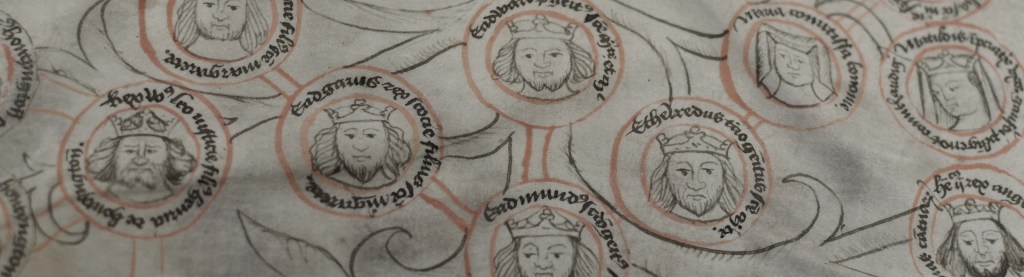
As part of the Anselm Adornes research project we have had a book accepted for publication with Brepols in their series: Late-Medieval and Early Modern Studies [LMEMS]. The book is provisionally entitled Anselm Adornes: Travel, Trade and Cultural Exchange, Intellectual Networks in Scotland, Bruges and Jerusalem. For this, I have been working on the chapter ‘Lost Books: The Manuscript Patronage of James III and Anselm Adornes.’
The chapter looks to investigate Anselm Adornes’ literary interests in relation to those of James III and prominent members of the Scottish court. It seeks to examine Scottish participation in emerging humanist circles in Bruges and how such connections influenced the expansion of humanist ideas in Scotland. Building on recent research into the literary and artistic interests of James III, I will expand upon this by considering the nature of Adornes’ and James III’s relationship and consider whether one contributing factor to this was a shared interest in humanist texts and ideas. The Adornes family assembled an impressive library and were documented as participating in the nascent culture of scholarly humanism in Flanders in the last half of the fifteenth century. In his 1452 will, Pieter Adornes (Anselm’s father) proposed to establish a public library in the Jerusalem chapel and he stated that ‘all of our books, both Latin and Flemish, should be kept in the Jerusalem chapel on lecterns, the Latin on the right side and the Flemish on the left, so that any person might profit from them.’ He conceived this beneficence along the lines of Cosimo I de’ Medici’s scheme for his public library in Florence.
I am examining documentary and material evidence for the Adornes’ library in relation to the artistic and literary interests of James III and the prominent Scottish bibliophiles: William Scheves, Archibald Whitelaw, and William Elphinstone. Two areas form key foci of this chapter; the nature and range of humanist texts collected and the material form of these texts. A key manuscript that binds Adornes to James III, and provides the strongest evidence for their shared interests, is a lost manuscript; the Itinerary written by his son Jan on his return from the Holy Land in 1471. By examining copies of this work, I will analyse what this tells us about Adornes and James III. What drew James III to Anselm Adornes? Was it a shared interest in travel, in emerging humanist interests, or an interest in the work of Netherlandish artists?
Aberdeen University Library Research Fellowship
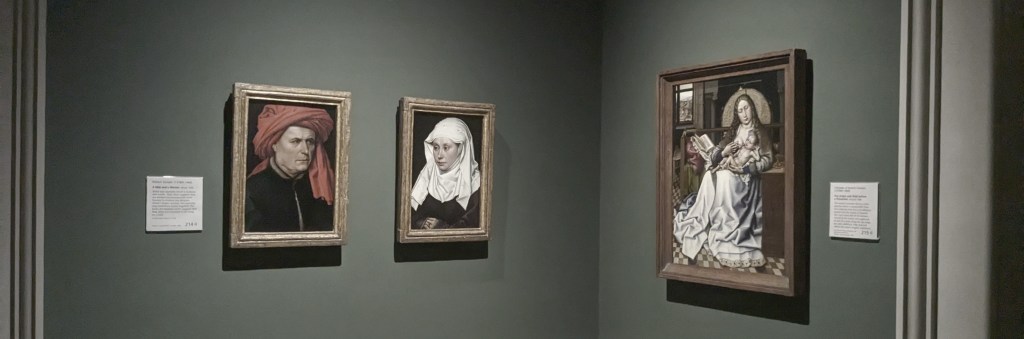
As part of a Research Fellowship at Aberdeen University Library in 2022, I will be visiting Aberdeen to give a talk on my findings.
In relation to this, I will combine hands-on research into the pigments and materials of Scottish manuscript illumination with recent archival and art historical research relating to manuscripts in their collections.
Reviving the Trinity Research Group
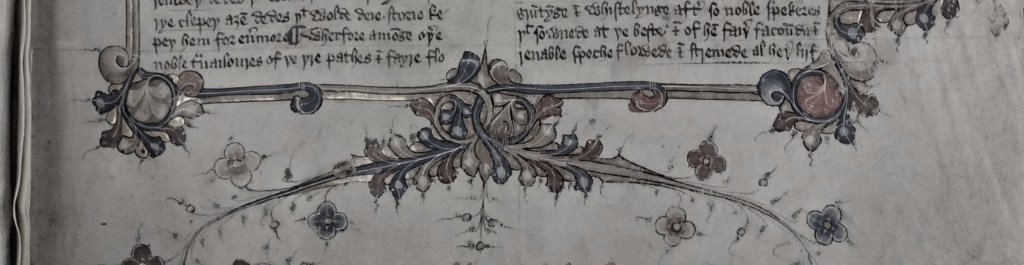
As part of the Trinity Research Group I have written a chapter for the forthcoming publication, Reviving the Trinity: Networks and Materialities in Scotland and Europe, 1400-1600.
In this chapter, ‘Repetition and Innovation Scottish Patrons and Netherlandish Artist’s, Visual and Archival Evidence,’ I examine the reuse of iconography of the Trinity Altarpiece within a series of illuminated manuscripts. A key question addressed is whether the source of this repetition relates to close artistic networks between panel painters and illuminators in Ghent and Bruges, or whether instead it stems from the instructions of Scottish patrons.
Edinburgh Manuscripts: Composition and Collection (EMCC)
Edinburgh Manuscripts is a multi-disciplinary research cluster aiming to foster dialogue and collaboration between researchers, librarians, students and curators who are working on manuscripts local to Edinburgh.
Edinburgh Manuscripts: Composition and Collection (EMCC) aims to promote, unite and strengthen current research into manuscript collections in Edinburgh. Our focus is both local and broad in scope, inclusive of work on transmission of manuscripts between Edinburgh and across the world throughout all periods of history. We also aim to consolidate partnerships between academic departments in the University of Edinburgh and the local research institutions of the Centre for Research Collections (CRC), the National Library of Scotland (NLS), and the National Museum of Scotland (NMS). We hope to improve postgraduate access to palaeography skills and object analysis by facilitating workshops and collaborative teaching with items in local collections. This cluster also supports the interdisciplinary focus of Edinburgh History of Art as a school by fostering research into both image and text in manuscripts and book history.
Gods, Books, and Trees in Renaissance Scotland
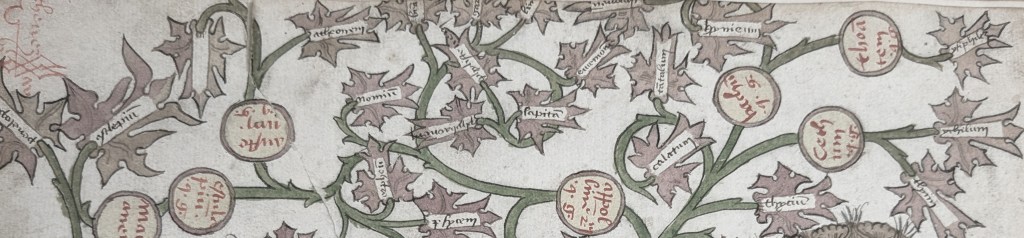
This is a collaborative project looking at illustrated printed books and nascent humanism in Scotland, with a particular focus on the book collection of William Scheves. The project will investigate the illumination or illustration of printed texts imported to Scotland at the turn of the sixteenth century.
 Bryony Coombs