
| Repository | National Records of Scotland |
| Reference | GD45/26/48 |
| Title | Manuscript of Walter Bower’s Scotichronicon, written by Magnus Makculloch and ‘illuminated’ by James Graye |
| Dates | [Late 15th century] |
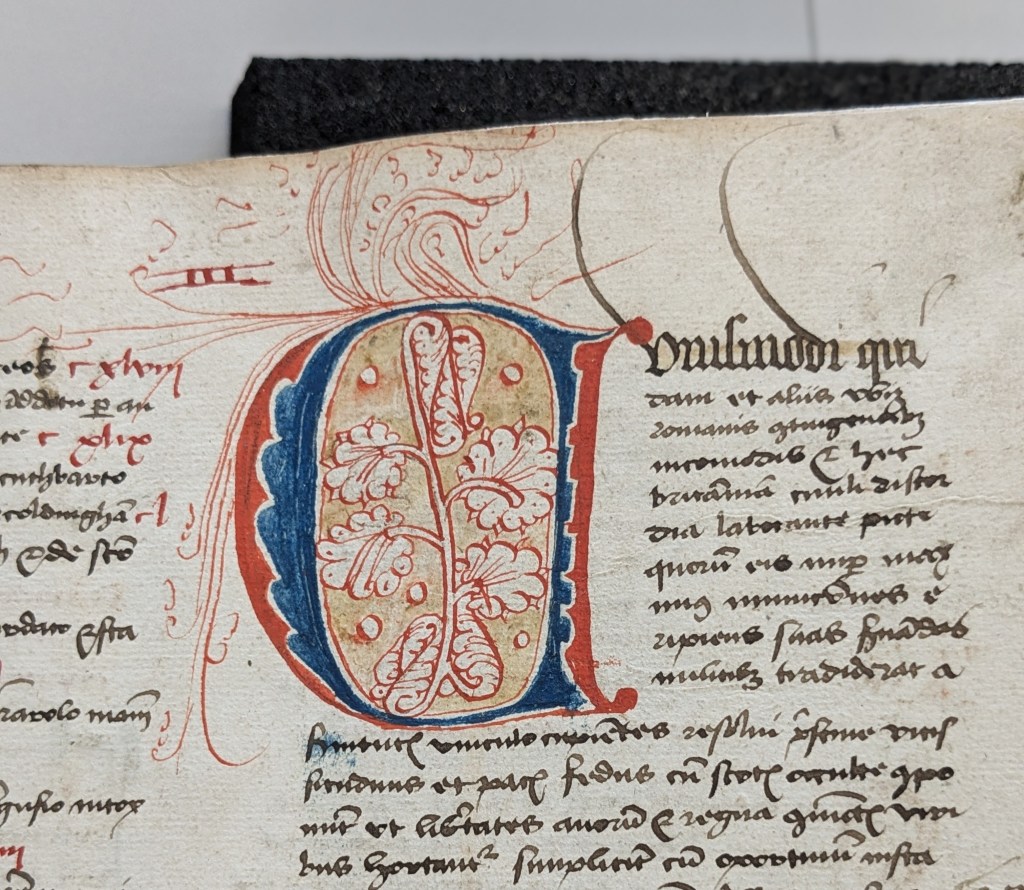
This is a brief record of a trip to The National Records of Scotland archives at Thomas Thomson House on Wednesday 2 October. The primary reason for this trip was to examine GD45/26/48, a copy of the Scotichronicon in private ownership but on deposit with the NRS. It belongs to the earl of Dalhousie and is normally referred to as the Brechin MS. The manuscript contains 420 folios of paper, written in double columns. It is one of two full copies of the Scotichonicon written by the professional scribe Magnus Makculloch. The manuscript also includes a colophon noting the name James Graye as the illuminator of this text: a few years later both Makculloch and Gray were in the household of William Schevez, archbishop of St Andrews (1478–1497). This is interesting since the manuscript is not illuminated in the normal sense of containing narrative images. I was, therefore, particularly keen to carefully examine the visual features of this manuscript to determine what was meant by this colophon.
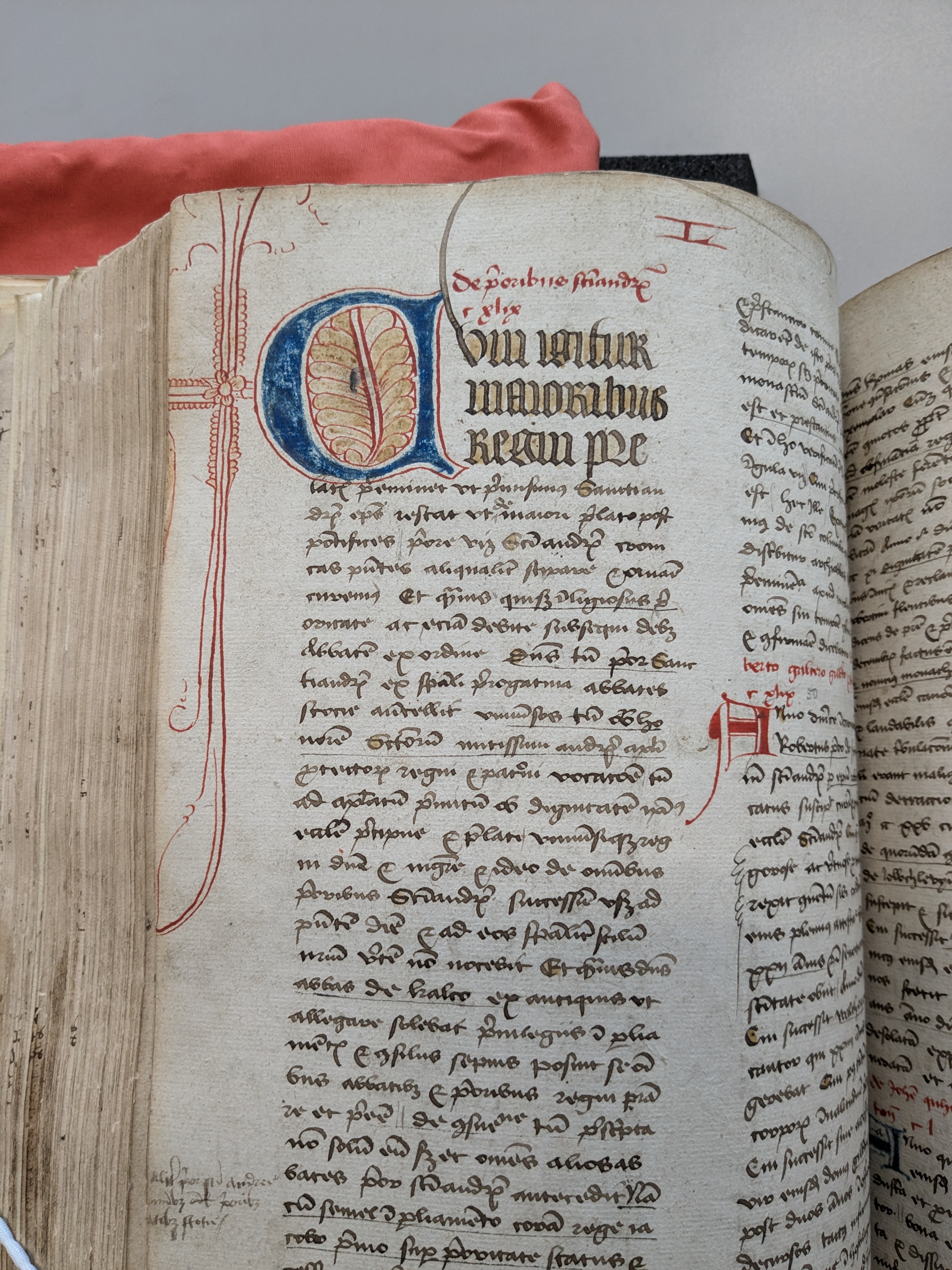
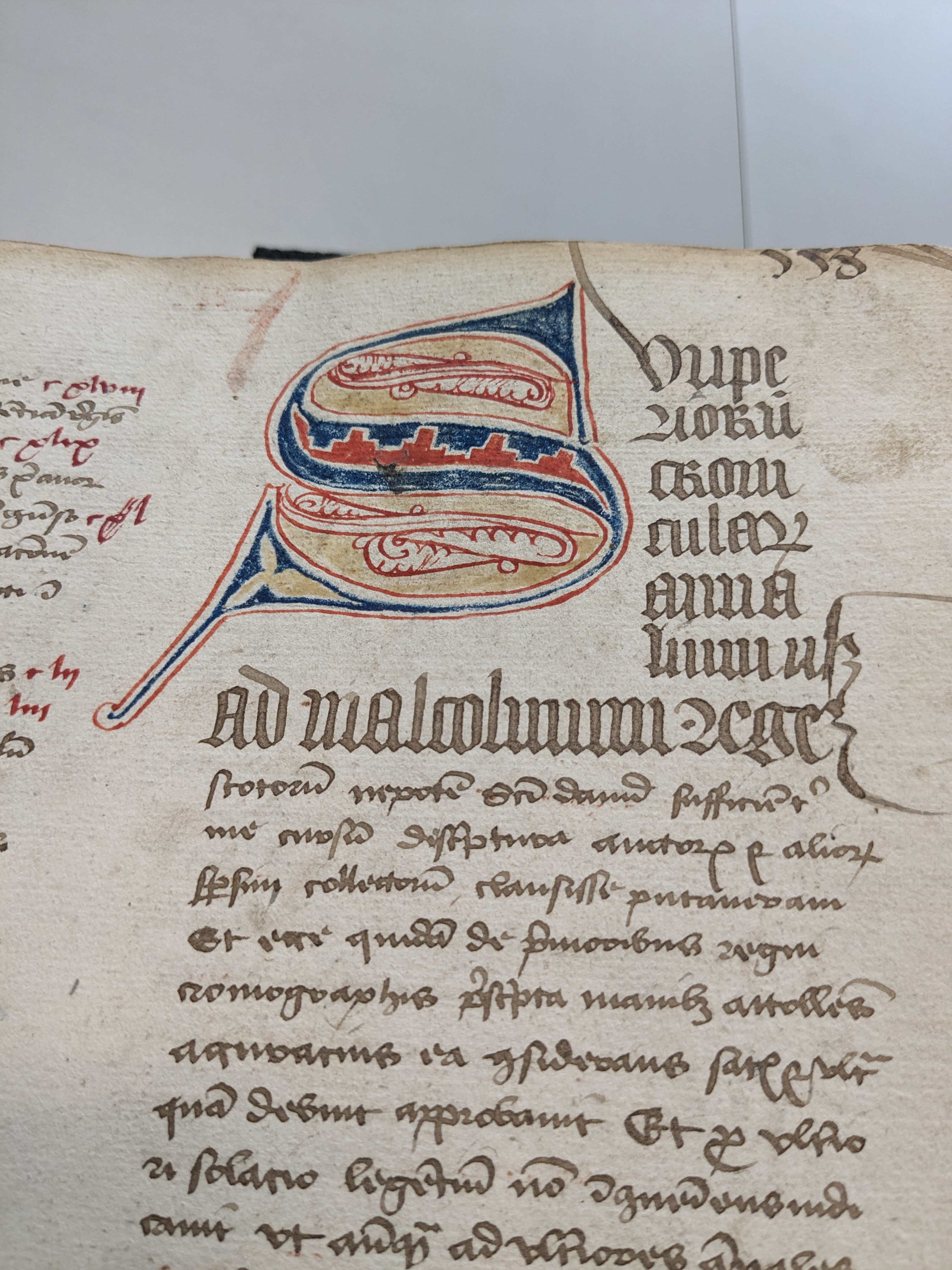
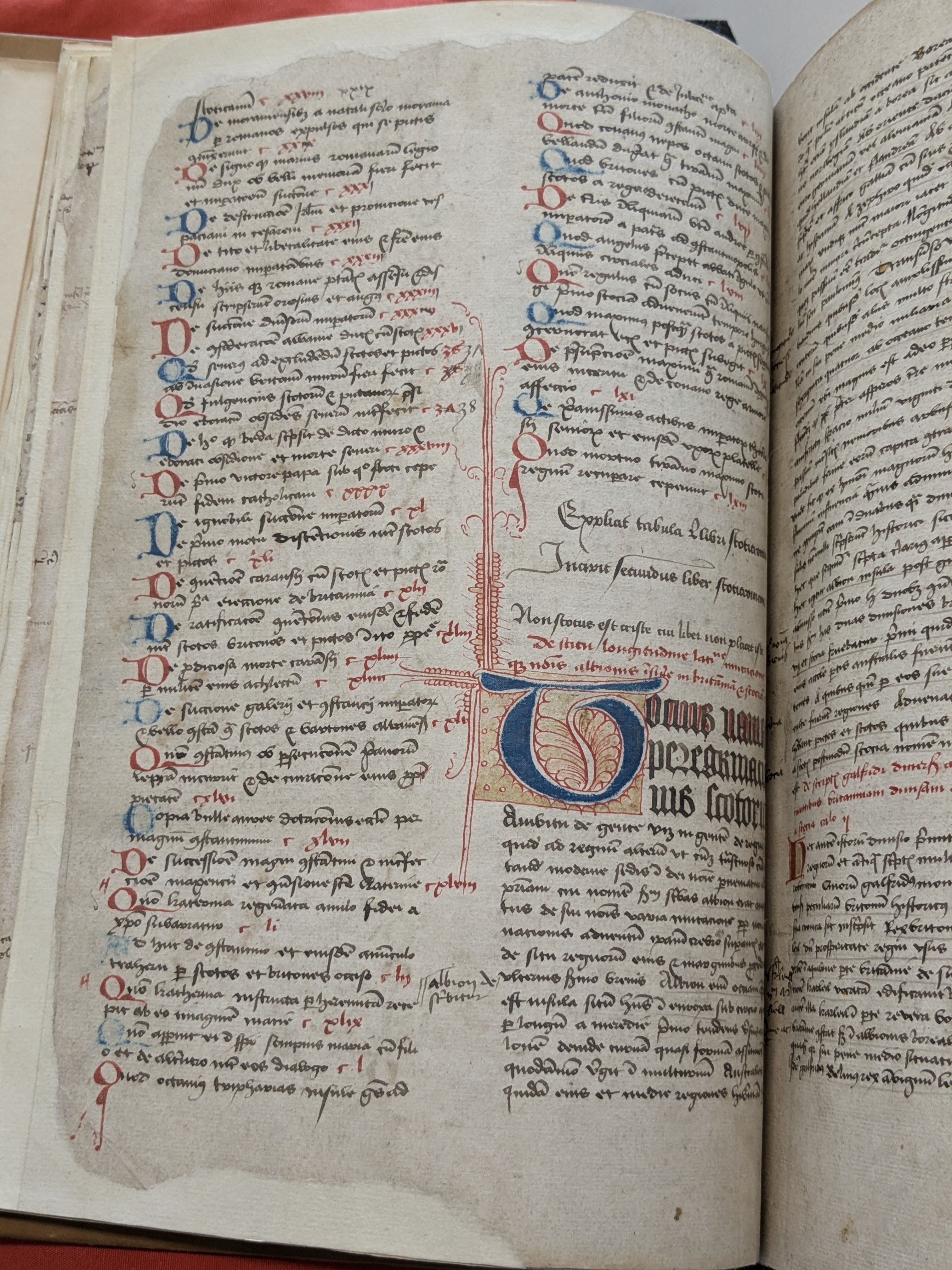
Although not an elaborately illuminated work in the traditional sense, the work is full of interesting visual features, rubricated in red, it contains initials in red, blue and yellow throughout. The style typical for a late fifteenth century Scottish work.
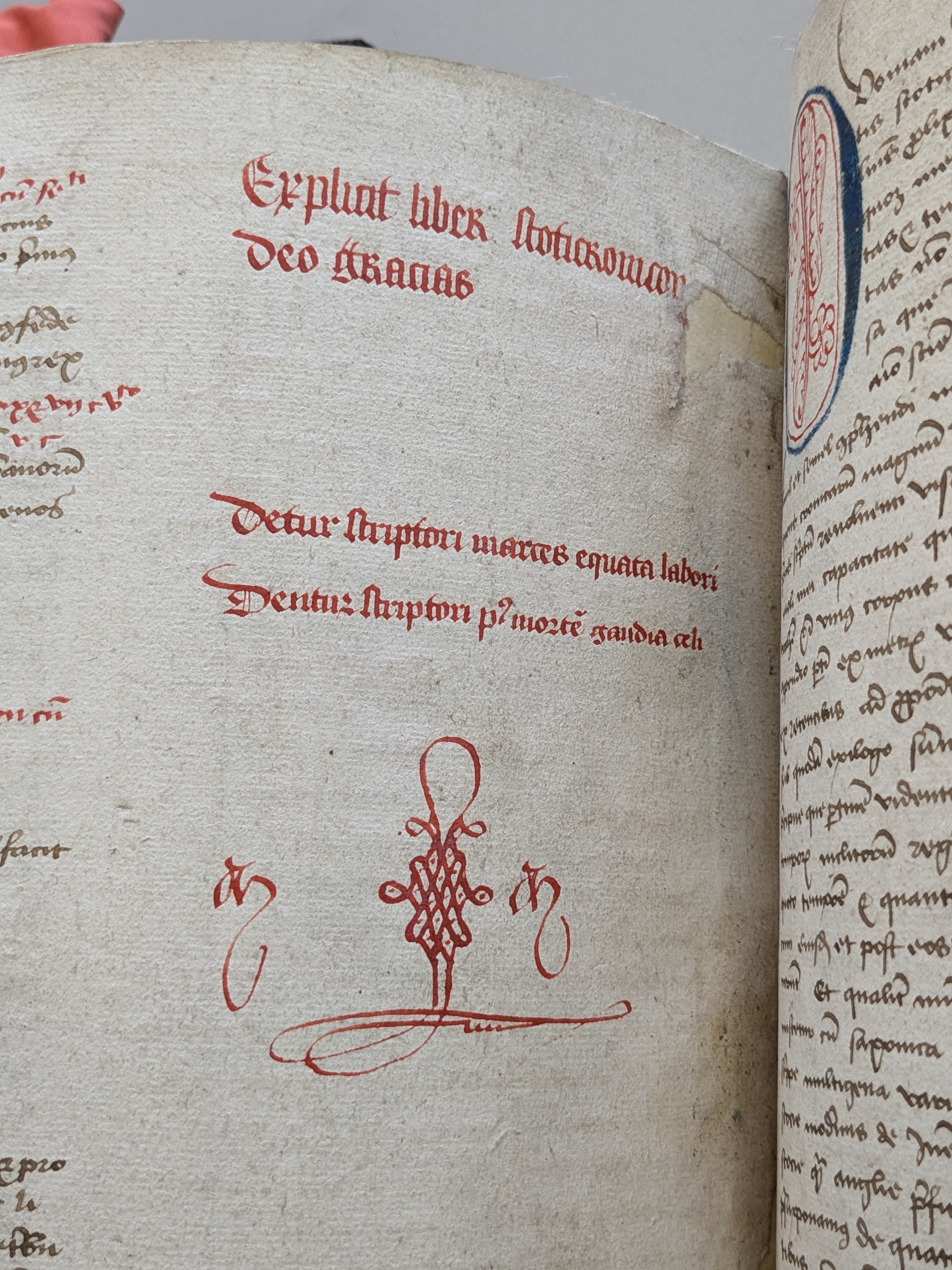
Makculloch notes at the end of Book II that he was working on this MS on 9 Jan 1480/1, and then at the start of Book XV that he had reached there by 2 April 1481.
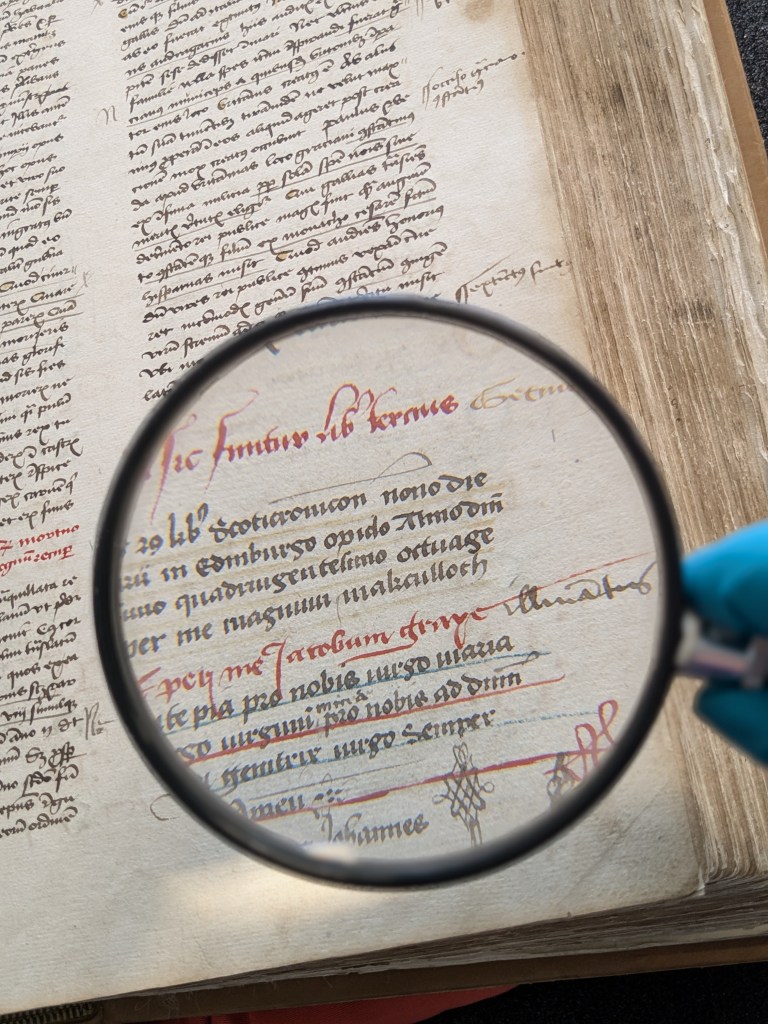
Of crucial importance for my work was determining the role of James Graye. A key piece of evidence for this is above. It is often noted that there is a colophon describing James Graye as the illuminator ‘illuminatus’ but it is never noted that this is a later addition not in the original hand…
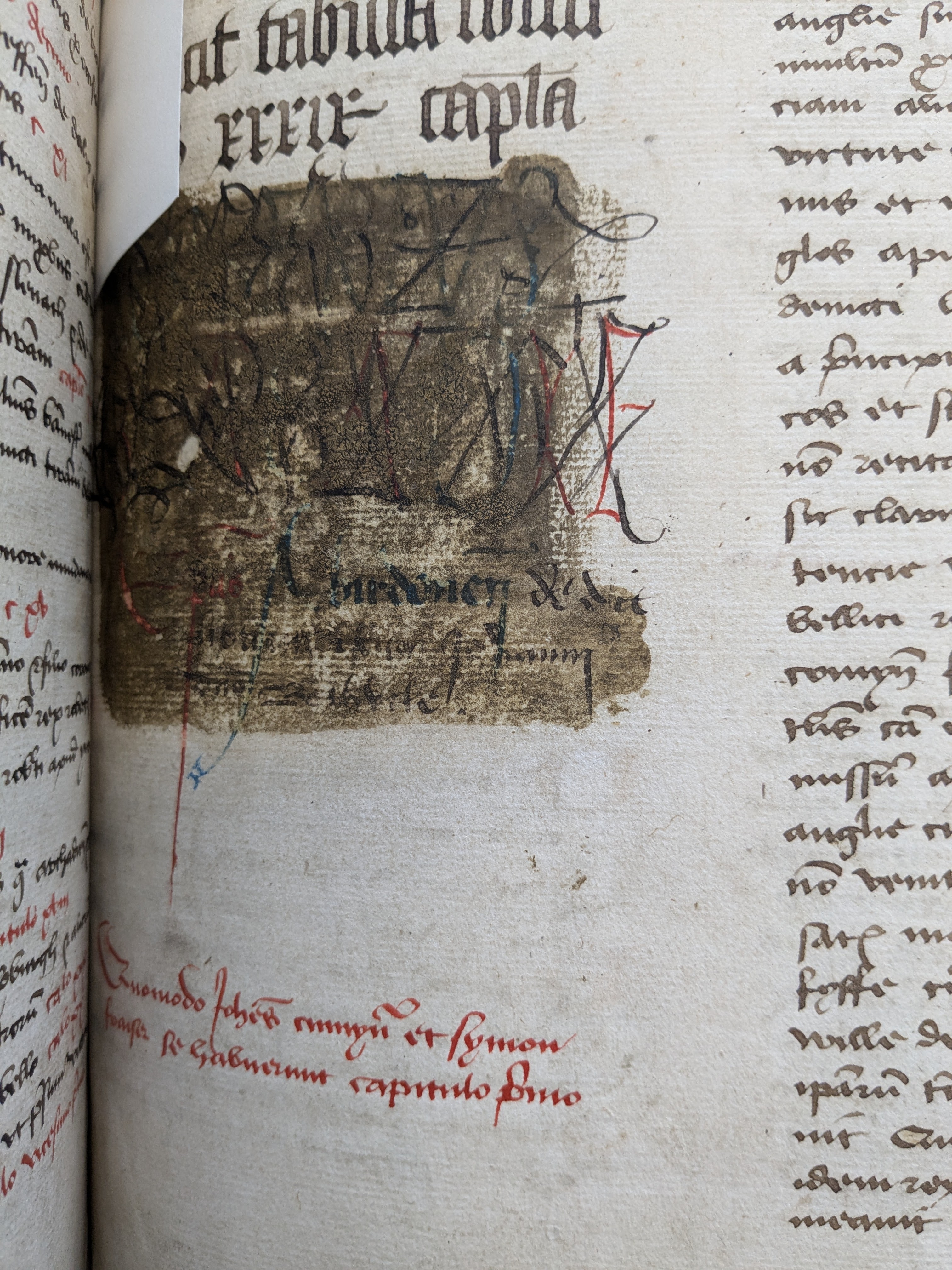
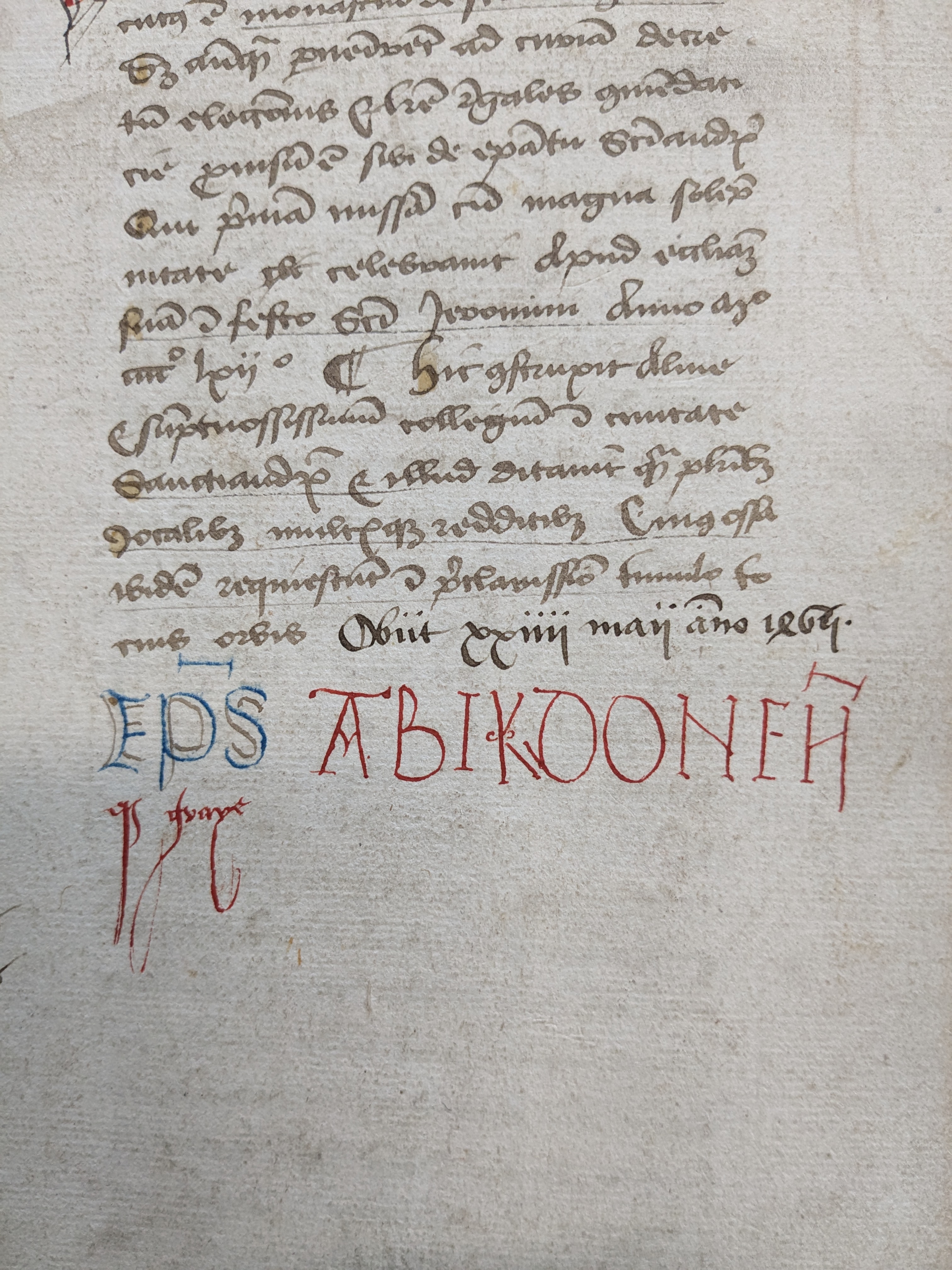
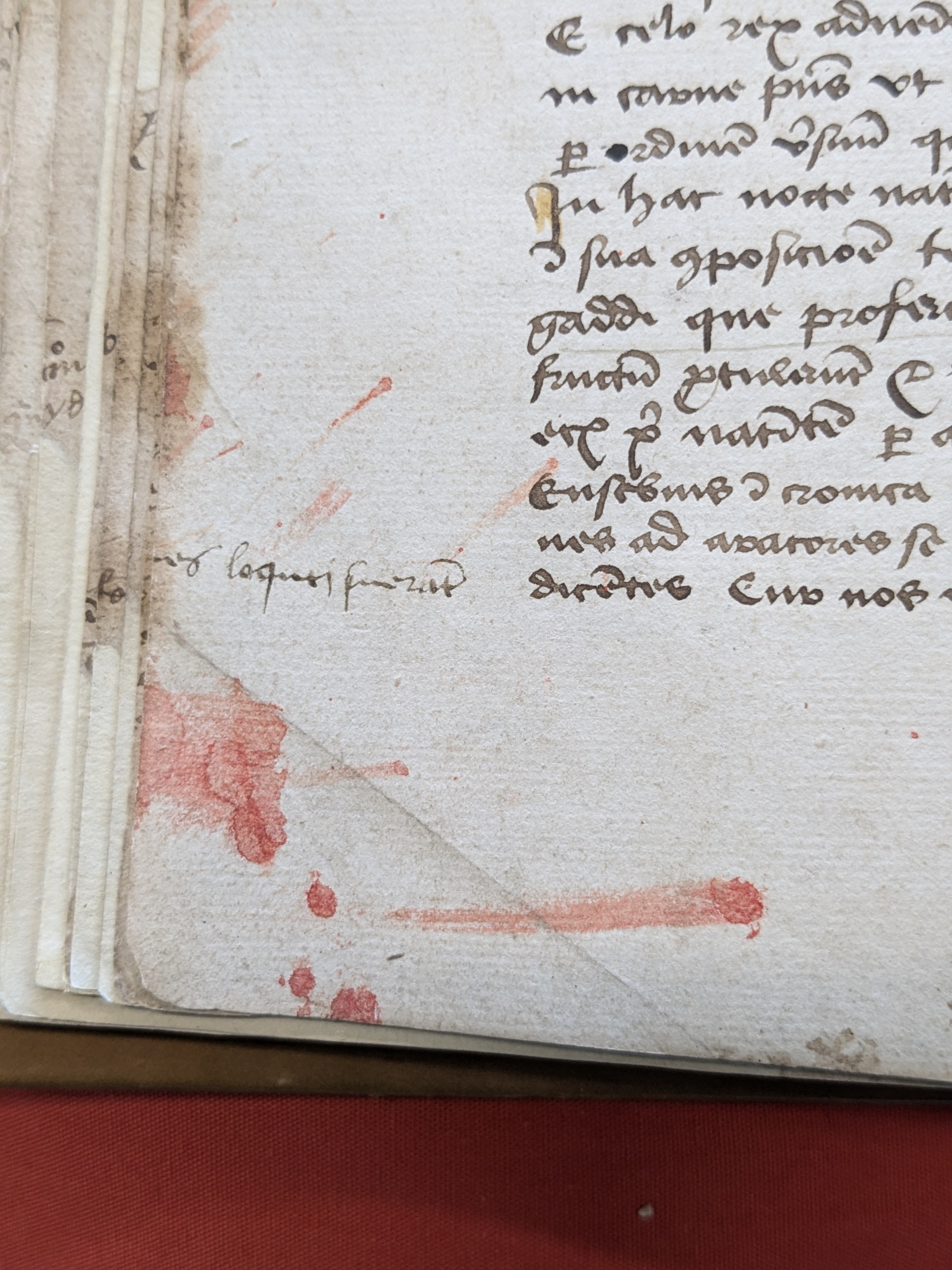
There is more to come on this in Scotland on Parchment but James Graye and his role in this book as rubricator or illuminator is of central importance – plus venire.
 Bryony Coombs
Leave a comment